"Show me a summer outfit for a weekend in Barcelona."
"What's the best running shoe for my first marathon?"
"I need a waterproof jacket for hiking in Scotland."
These aren't search terms. They're conversations. And increasingly, they're how customers expect to shop.
For decades, ecommerce search relied on keywords. Customers adapted by simplifying their queries, while retailers spent countless hours building rules, filters and synonym libraries to compensate. Today AI is reversing that relationship. Instead of customers learning to search like a machine, machines are finally learning to understand customers.
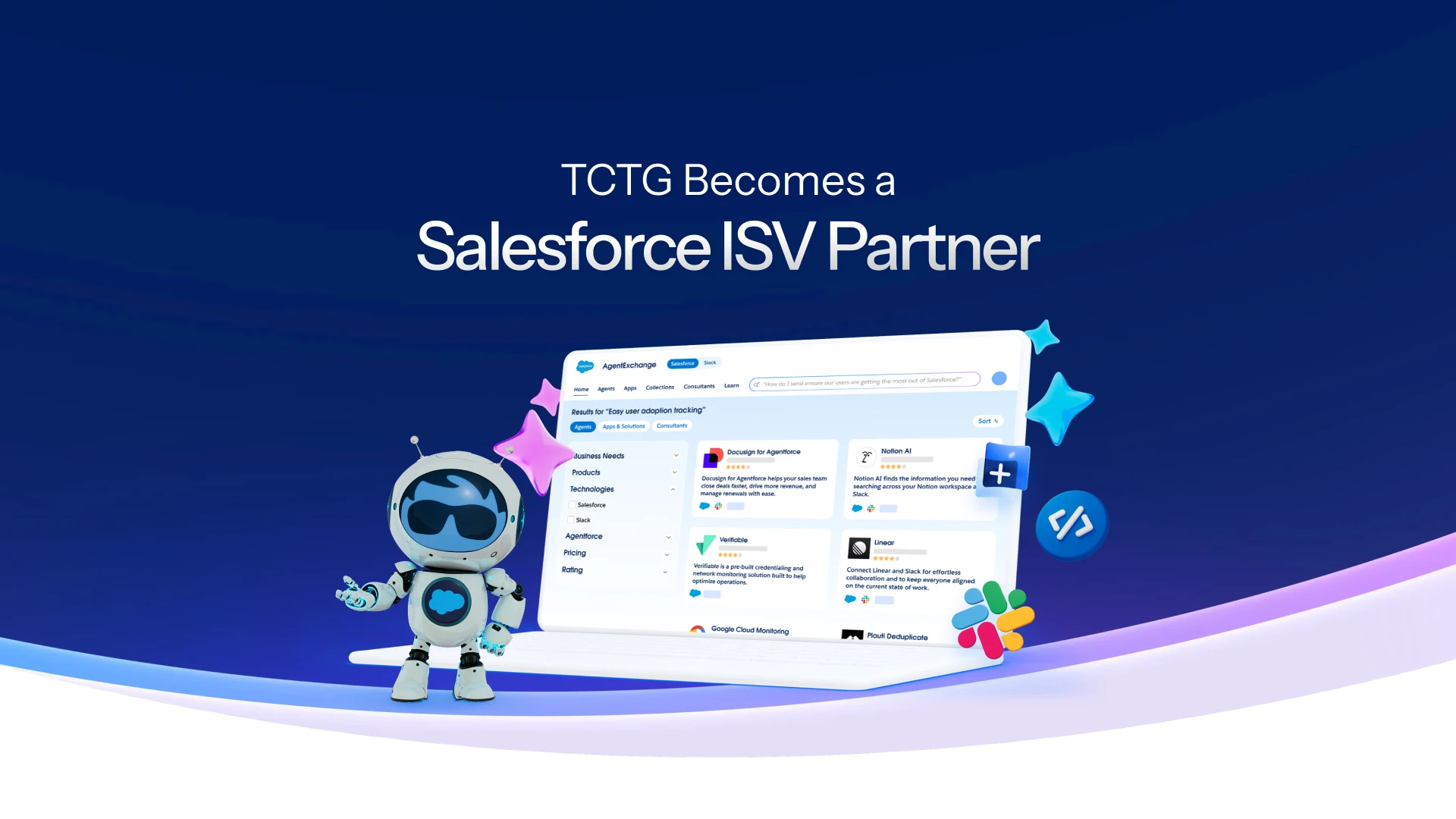
That's one of the biggest shifts we've seen in ecommerce for years and it's why Salesforce's announcement of Agentic Commerce Search caught our attention. More importantly, it's why enterprise retailers should pay attention too.
Why Does This Matter Now?
Salesforce research shows 39% of consumers have already used AI to find products. Last holiday season, Salesforce estimated that AI and agent-referred traffic drove 21% of global orders, worth around $263 billion.
Consumers are growing comfortable asking AI assistants for detailed questions and receiving contextual answers in seconds. Naturally, they expect the same when they arrive at your storefront. The keyword search wasn't built for that. It matches words. Customers now expect it to understand intent.
Search is no longer just another feature. It's one of the most influential touchpoints in the journey, shaping product discovery, confidence and conversion.
The future of ecommerce search isn't about finding products faster. It's about understanding shoppers better.
What Does This Look Like in Practice?
Salesforce highlights West Marine, where getting the wrong part is worse than finding nothing at all. A first-time boat owner searching "boat oil" has no idea which specification their engine needs. Keyword search hands a page of generic lubricants.
Using Agentic Commerce Search, West Marine's digital associate now interprets the intent behind the question and guides the shopper to the correct marine-grade oil. Salesforce reports that the retailer eliminated thousands of manual rules and doubled conversion.
That example matters because it isn't really a search story. It's a data story. An engine that reads intent brilliantly still can't recommend a product whose attributes are missing or inconsistent.
What Should Enterprise Retailers Be Asking?
The question is no longer "how do we improve search?" It's becoming:
- Can our storefront interpret conversational, intent-based queries?
- How much time does our team spend maintaining manual merchandising rules? Salesforce reports an average 85% reduction, and it's worth asking what those rules were compensating for.
These aren't technology questions. They're commercial ones.
Why the Announcement Matters
Salesforce recognised The Commerce Team among the implementation partners supporting Agentic Commerce Search, alongside a select group of global commerce consultancies. We're proud of that, and it reinforces something we see in every client conversation. Retailers don't just need access to new AI capabilities. They need partners who can translate them into measurable outcomes.
Our team brings two decades of experience helping enterprise retailers through every major shift in digital commerce. Today, that means helping retailers prepare for AI-powered commerce, from enriching product data and modernising storefront architecture to implementing intelligent search and optimising customer journeys that convert.
Whether you're running Salesforce Commerce Cloud, Shopify or SCAYLE, the question isn't whether AI will influence ecommerce. It already is.
Because the next competitive advantage won't belong to the retailers with the most AI. It will belong to those who use it to understand their customers better. At The Commerce Team Global, we're excited to help retailers navigate what's next and we're proud to be recognised by Salesforce as part of that journey.

.svg)