.svg)

The Client
A global audio brand built on engineering excellence
For more than six decades, KEF has set the benchmark for premium audio. As part of GP Acoustics International, the brand has built a worldwide reputation for engineering, craftsmanship and sound quality, serving audiophiles, music enthusiasts and home cinema customers across global markets.
Customers buying premium audio expect a digital experience as considered as the products themselves. But as KEF's ecommerce estate grew across regions, the technology behind it had grown complex and the experience was no longer keeping pace with the brand.
The Challenge
A growing global business constrained by a legacy architecture
Like many international brands, KEF's ecommerce platform had evolved over time to support regional requirements and market expansion. While this approach enabled localisation, it also introduced significant complexity behind the scenes.
The existing commerce ecosystem faced several challenges:
Legacy Technology
The platform ran on an outdated Shopify architecture that limited flexibility and made every change harder than it should be.
Fragmented Global Stores
Individual storefronts existed across multiple regions, creating duplication of effort for internal teams and increasing the operational burden of managing content, products and customer experiences globally.
Heavy Third-Party Dependency
A stack of external apps and custom-built solutions delivered functionality that Shopify could increasingly handle natively, adding cost, complexity and risk.
At the same time, KEF wanted to improve site performance, simplify administration and establish a scalable foundation capable of supporting future commercial growth.
The Solution
Migrating KEF to Shopify Online Store 2.0
The Commerce Team Global migrated KEF from its legacy environment to the latest Shopify Online Store 2.0 architecture and consolidated its scattered regional stores into market-based storefronts. Every decision was measured against three goals: reduce the manual workload on internal teams, improve performance and customer experience, and build a scalable foundation for future growth.
Shopify 2.0 Migration
A full migration from KEF's legacy Shopify environment to Shopify Online Store 2.0, creating a stronger technical foundation for future development.
Market Consolidation
TCTG consolidated individual regional stores into market-based storefronts, reducing duplicated effort while preserving local flexibility. Fewer stores to run, simpler governance and a more scalable base for expansion.
Native Shopify Adoption
Content and merchandising were rebuilt on Shopify's native CMS and metafields wherever possible, replacing third-party apps. The result: a cleaner architecture, reduced software costs, and less dependency on external providers.
Technical Debt Cleared
Legacy implementations, obsolete functionality and unnecessary customisations were reviewed and removed, significantly improving platform health and long-term sustainability.
The Results
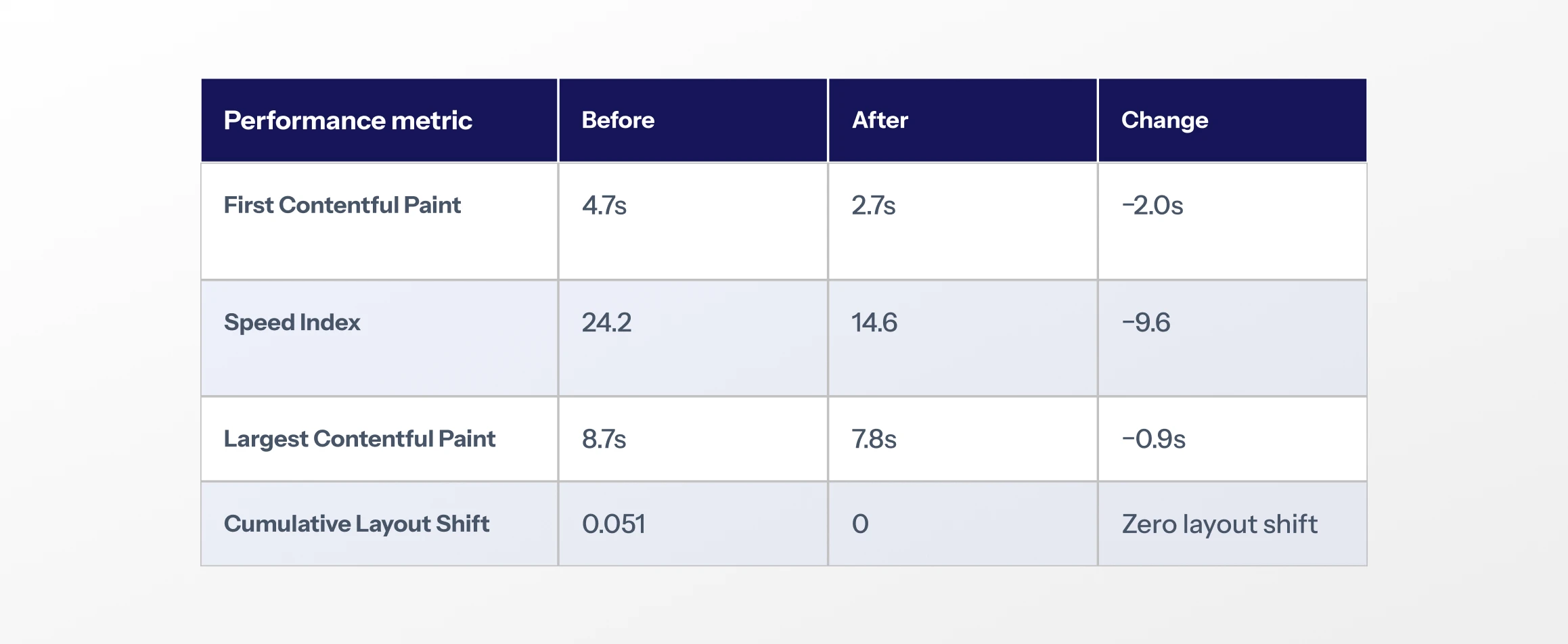
The migration delivered measurable improvements across the EU storefront.
Complexity often creeps in over time, more storefronts, more apps, more customisation and ultimately more cost. The KEF project demonstrates what can be achieved by stepping back and simplifying that architecture. Moving to Shopify Online Store 2.0 gave us the opportunity to remove technical debt, consolidate markets and make greater use of native functionality, while improving performance. The result is a leaner commerce platform designed not just for where KEF is today, but for where the business wants to go next.
Paul Sanderson - CEO, The Commerce Team Global
Is This You?
The KEF story is relevant if your platform is holding back your growth
- You run multiple regional storefronts that create unnecessary overhead.
- Your platform is on a legacy architecture that limits performance.
- Third-party apps have become critical to daily operations and are pushing up costs.
- Technical debt is slowing your site and holding back innovation.
- You have multi-market ambitions but aren't confident your current setup can support them.
- You've considered a Shopify migration but haven't found a partner you trust to do it properly.
- Your platform is on a legacy architecture that limits performance.
The right platform makes every part of the business easier, from content management to international expansion.